Report highlights Pakistan’s role in easing Iran-Saudi tensions
Report claims Asim Munir used oil venture ties to help prevent further Iranian strikes on Saudi Arabia
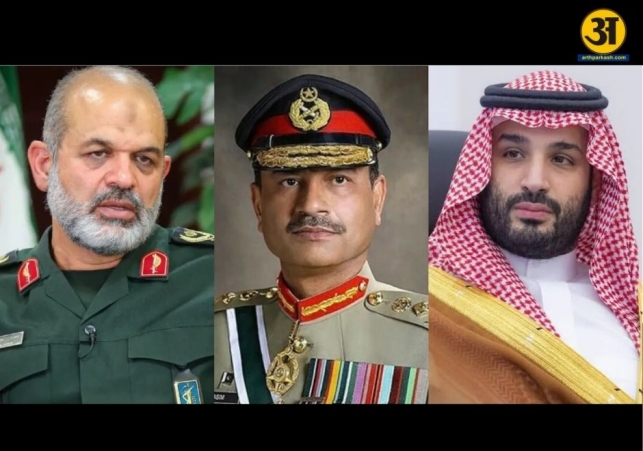
A new report has drawn attention to Pakistan’s alleged behind-the-scenes role in reducing tensions between Iran and Saudi Arabia during the ongoing conflict in the Middle East. According to claims cited in the report, Pakistan Army Chief Field Marshal Asim Munir used his influence and business connections linked to an oil transportation venture to help persuade Iran to halt further strikes on Saudi Arabia.
The report, published by The Times of Israel, alleges that Munir leveraged a joint oil transport arrangement connected to senior figures in Iran’s Islamic Revolutionary Guard Corps (IRGC) during negotiations earlier this year. While the claims have attracted international attention, it is important to note that they are based on unnamed officials cited in the report and have not been independently confirmed by the governments involved.
The development comes at a time when the Middle East continues to face heightened tensions following the conflict involving the United States and Iran. Several countries in the Gulf region have found themselves caught in the middle of growing regional instability, raising concerns about security, energy supplies and diplomatic relations.
Claims of a secret oil venture
According to the report, the alleged agreement was reached in March during efforts to prevent the conflict from spreading further across the region. The report claims that Munir relied on his relationship with IRGC-linked figures, including Ahmad Vahidi, to convince Iranian authorities to stop targeting Saudi Arabia.
Sources quoted in the report alleged that a joint oil transportation venture operating between Iran and Pakistan played a role in these discussions. Although the report did not identify the company involved, it claimed that the business had been moving Iranian oil into Pakistan since late 2025.
The report further suggested that the venture became particularly profitable during periods when Iran faced international pressure and restrictions affecting its oil exports. According to the unnamed officials cited, the business arrangement generated significant financial benefits for those associated with it.
One of the central claims in the report is that Munir warned Iranian officials that continued attacks on Saudi Arabia could threaten the future operation of the alleged venture. The report stated that Pakistan’s military leadership viewed stability in Saudi Arabia as strategically important and wanted to avoid any escalation that could damage relations between Riyadh and Islamabad.
Saudi Arabia and Iran have long been regional rivals, competing for influence across the Middle East. Relations between the two countries have experienced periods of tension and confrontation over the years. Any effort to reduce hostilities between them is therefore viewed as significant for regional stability.
The report also suggested that Pakistan sees strong relations with Saudi Arabia as a major strategic priority. Saudi Arabia has historically maintained close diplomatic, economic and security ties with Pakistan. Millions of Pakistani citizens work in the Kingdom, and Saudi financial support has often played an important role in Pakistan’s economy.
Because of these longstanding ties, Pakistan has frequently sought to position itself as a bridge between rival powers in the Muslim world. If the claims are accurate, the alleged intervention would represent another example of Islamabad attempting to balance its relationships with both Tehran and Riyadh.
However, neither Pakistan nor Iran has officially commented on the specific allegations regarding the oil venture. As a result, many details remain unverified.
ALSO READ: India firmly rejects Pakistan’s claims on Kashmir at the United Nations
ALSO READ: US launches fresh strikes on Iran as tensions rise across the Gulf region
Saudi-Pakistan defence ties and regional implications
The report has also renewed attention on the growing strategic partnership between Pakistan and Saudi Arabia.
In September 2025, the two countries signed a major defence cooperation agreement known as the Strategic Mutual Defense Agreement. The pact was widely viewed as one of the most significant security arrangements between the two nations in recent decades.
Under the agreement, both countries pledged to support each other in the event of external aggression. The language of the deal reportedly stated that an attack on one country would be treated as an attack on both, drawing comparisons with collective defence arrangements such as NATO.
The agreement was signed during Pakistani Prime Minister Shehbaz Sharif’s visit to Saudi Arabia, where he held talks with Crown Prince Mohammed bin Salman. The deal reflected a deepening security partnership between the two countries and highlighted their shared concerns about regional stability.
Reports following the agreement indicated that Pakistan expanded its military presence in Saudi Arabia. Pakistani personnel, including troops and military aircraft, were reportedly deployed at strategic locations within the Kingdom as part of ongoing defence cooperation.
Security analysts believe that these arrangements have strengthened Pakistan’s importance in Saudi Arabia’s defence planning. As a result, any threat to Saudi security could have direct implications for Pakistan as well.
The alleged efforts by Munir to reduce tensions with Iran, as described in the report, fit within this broader context of growing Pakistan-Saudi cooperation.
The development has also attracted attention in India. When the defence agreement between Saudi Arabia and Pakistan was announced last year, Indian officials said they were closely monitoring the situation and evaluating its potential impact on regional security.
At the time, India’s Ministry of External Affairs stated that it was aware of discussions surrounding the agreement and would study its implications carefully. Officials emphasized that India remained committed to safeguarding its national interests while continuing to monitor changes in the regional security environment.
Experts note that the Middle East remains one of the world’s most strategically important regions due to its energy resources, trade routes and geopolitical significance. Any shift in alliances or security arrangements can have consequences far beyond the region itself.
The latest report has therefore sparked interest not only because of the allegations involving an oil venture but also because it highlights the complex network of relationships connecting Pakistan, Iran and Saudi Arabia.
While questions remain about the accuracy of the claims and the extent of Pakistan’s involvement, the report underscores the growing importance of diplomacy, economic ties and strategic partnerships in managing conflicts across the Middle East.
As tensions continue to evolve, observers will be watching closely to see whether further information emerges regarding the alleged negotiations and whether the countries involved choose to publicly address the claims. For now, the report offers a glimpse into the intricate political and economic factors that often operate behind the scenes during major regional crises.
Related News